

Navigating SEND caregiving feels increasingly complex as demand surges and families struggle with fragmented support systems. The number of children with SEND Education, Health and Care Plans has doubled since 2014, placing unprecedented pressure on parents seeking quality care. The 2026 reforms promise transformative change through early intervention funding, digital personalised plans, and streamlined access to specialist support, giving families practical tools to enhance their child's development and wellbeing.
Table of Contents
- Understanding The 2026 Send Reform Landscape
- Prerequisites For Effective Send Caregiving
- Step-By-Step Best Practices For Send Caregiving In 2026
- Common Caregiving Mistakes And How To Troubleshoot Them
- Measuring Success: Expected Outcomes And Benchmarks
- Alternative Approaches And Tradeoffs In Send Caregiving
- Safety, Legal, And Ethical Considerations In Send Caregiving
- Leveraging Digital Tools And Platforms For Send Caregiving
- Discover Specialised Send Caregiving Support With Sendcare
- Frequently Asked Questions About Send Caregiving Best Practices 2026
Key takeaways
| Point | Details |
|---|---|
| Early intervention funding | £1.6 billion supports mainstream SEND provisions, enabling timely specialist access without lengthy EHCP waits. |
| Digital Individual Support Plans | Co-produced digital ISPs ensure personalised, accessible care coordination across education transitions. |
| Verified specialist carers | Enhanced DBS checks and mandatory SEND training guarantee safe, qualified caregiving tailored to complex needs. |
| Regular plan reviews | Biannual ISP updates maintain alignment with developmental progress and adjust support strategies proactively. |
| On-demand expert access | 'Experts at Hand' delivers specialist guidance immediately, reducing delays and improving outcomes. |
Understanding the 2026 SEND reform landscape
The UK SEND system faces mounting pressure as more children require specialised support. EHCP numbers have doubled since 2014, creating bottlenecks that delay crucial interventions. The 2026 reforms address these challenges head on, reshaping how families access and coordinate caregiving.
Central to these changes is the £1.6 billion Inclusive Mainstream Fund, designed to strengthen early years and mainstream school SEND provisions. This investment shifts the focus from reactive, assessment-heavy processes to proactive early intervention. Schools now carry legal duties to provide universal SEND support with properly trained staff, ensuring every child receives appropriate help without bureaucratic delays.
The reform philosophy prioritises inclusive mainstream education wherever possible. Specialist support integrates seamlessly into regular classrooms rather than isolating children in separate settings. This approach benefits social development whilst maintaining access to expert guidance when needed.
Key reform elements include:
- Mandatory SEND training for all education staff to recognise and respond to diverse needs
- Streamlined assessment processes reducing waiting times for specialist evaluations
- Enhanced funding mechanisms enabling schools to deliver support without awaiting formal EHCP approval
- Digital infrastructure supporting seamless information sharing between parents, schools, and healthcare providers
These structural changes create an environment where families can implement SEND reform trends and challenges with greater confidence and fewer obstacles.
Prerequisites for effective SEND caregiving
Before implementing caregiving best practices, parents need specific foundations in place. Success depends on early preparation and understanding available resources.
Early identification forms the cornerstone of effective intervention. Schools and healthcare providers now use standardised screening tools to spot developmental concerns months earlier than previous systems allowed. Early intervention is backed by £1.6 billion funding to enhance mainstream SEND support, making timely assessments accessible to all families regardless of EHCP status.

Understanding Individual Support Plans represents another critical prerequisite. These digital documents replace fragmented paper records, consolidating your child's needs, strategies, and progress in one accessible platform. Parents must familiarise themselves with ISP structure and co-production processes to participate effectively in planning meetings.
Verified carer access requires knowing where to find qualified professionals. Mandatory SEND training and enhanced DBS checks ensure carers are qualified and safe, but parents must actively verify credentials before booking sessions. Look for platforms conducting comprehensive background checks and requiring evidence of specialist training.
Digital literacy enables smooth coordination. Modern caregiving relies on apps and portals for scheduling, communication, and documentation. Basic skills navigating these tools prevent frustration and delays.
Pro Tip: Spend 30 minutes exploring your local authority's digital SEND portal before your first planning meeting to understand available features and avoid technical hiccups when accessing early intervention funding and support or reviewing SEND staff training and carer qualifications.
Step-by-step best practices for SEND caregiving in 2026
Implementing effective caregiving follows a clear sequence aligned with 2026 reform priorities. Each step builds on the previous one, creating comprehensive support.
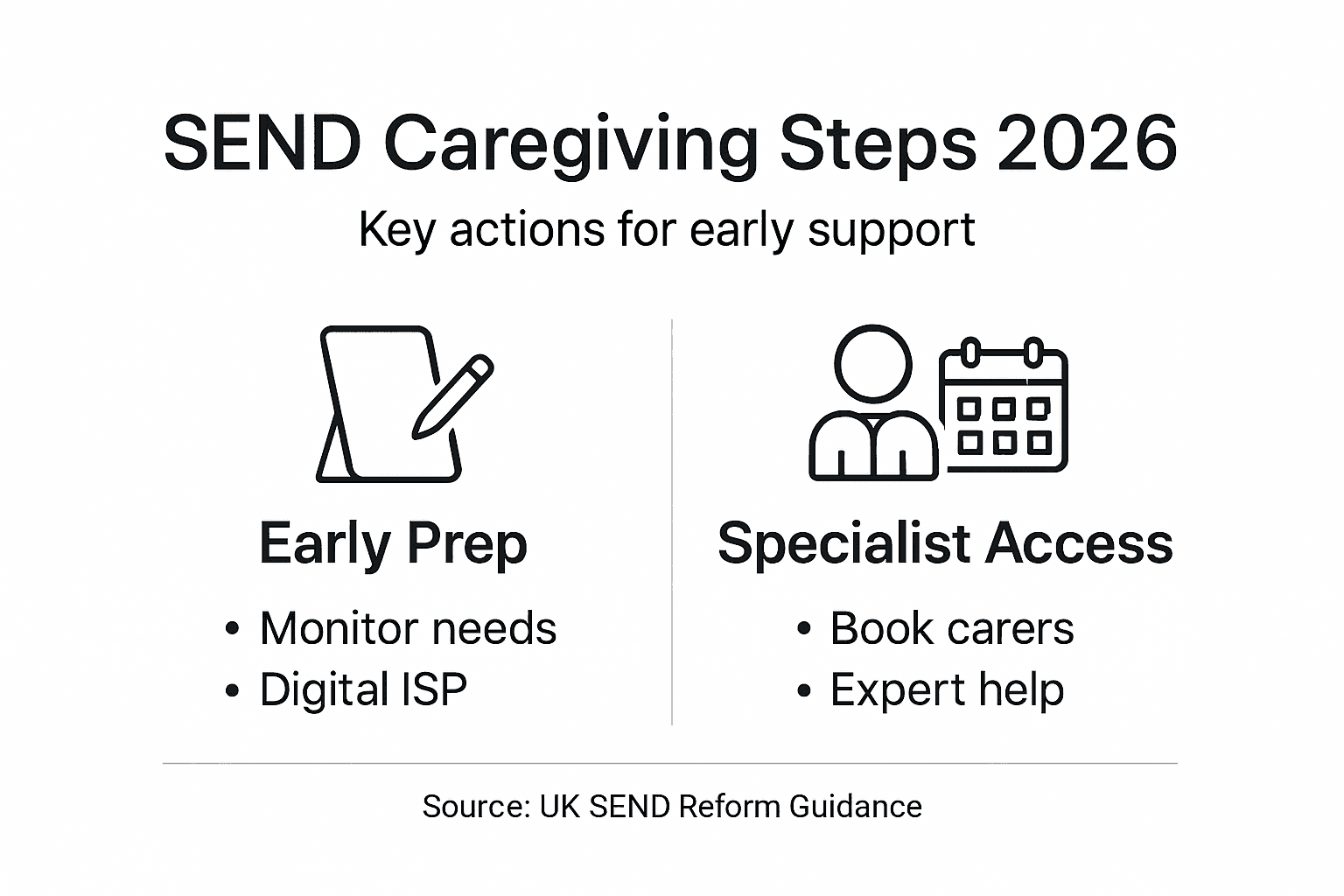
Step 1: Monitor and identify needs early
Use developmental screening tools available through your GP, health visitor, or nursery. Report concerns promptly rather than waiting for obvious difficulties to emerge. Early identification triggers faster access to early intervention funding and support.
Step 2: Co-produce a digital ISP
Every child receiving SEND support will have a digital Individual Support Plan co-produced with parents. Work with teachers, SENCOs, and healthcare professionals to document your child's strengths, challenges, and goals. Ensure the plan includes specific, measurable targets you can track at home.
Step 3: Access specialist support via 'Experts at Hand'
'Experts at Hand' provides on-demand specialist support without EHCP. Request consultations with speech therapists, occupational therapists, or educational psychologists through your school. This removes waiting barriers that previously delayed crucial interventions.
Step 4: Book verified, DBS-checked carers
Use platforms offering comprehensive verification to find verified carers on SENCARE who match your child's specific needs. Check for enhanced DBS clearance, SEND qualifications, and relevant experience with conditions like autism or ADHD.
Step 5: Maintain ongoing communication and review
Schedule regular check-ins with carers and education staff. Update your child's ISP whenever you notice developmental changes or new challenges. Consistent communication ensures everyone works from the same information.
| Step | Purpose | Available Resources |
|---|---|---|
| Early monitoring | Identify needs before they escalate | GP screenings, nursery observations, health visitor assessments |
| Digital ISP creation | Centralise support planning with all stakeholders | Local authority SEND portals, school ISP systems |
| Specialist access | Obtain expert guidance without EHCP delays | Experts at Hand, school-based therapists |
| Verified carer booking | Secure safe, qualified caregiving tailored to needs | SENCARE platform, local authority care directories |
| Regular reviews | Adapt support as child develops | Biannual ISP meetings, termly school reviews |
Pro Tip: Mark ISP review dates in your calendar immediately after each meeting to maintain momentum and prevent support plans from becoming outdated between formal assessments.
Explore how digital individual support plans streamline coordination and learn more about Experts at Hand specialist access through official government resources.
Common caregiving mistakes and how to troubleshoot them
Even well-intentioned parents encounter obstacles when implementing SEND caregiving practices. Recognising these pitfalls early prevents setbacks.
Delaying specialist access
Many families wait months believing they need an EHCP before requesting specialist input. This creates unnecessary gaps in support. Use 'Experts at Hand' services immediately when concerns arise. The system exists precisely to eliminate waiting times for initial consultations.
Treating ISPs as static documents
Some parents complete initial ISP meetings then rarely revisit the plan. Children develop rapidly, rendering outdated strategies ineffective. Regular ISP reviews improve educational and development results. Schedule updates every six months minimum, more frequently if your child experiences significant changes.
Inadequate carer verification
Booking caregivers without confirming credentials puts children at risk. Always verify enhanced DBS clearance, request proof of SEND training certificates, and check references from other SEND families. Platforms conducting these checks systematically save you time whilst ensuring safety.
Missing early warning signs
Delays in accessing support, insufficient personalised plans, and lack of timely reviews reduce outcomes. Parents sometimes dismiss early developmental differences as temporary. Trust your instincts when something feels off. Early screening rarely harms but delayed intervention frequently does.
Poor communication coordination
Fragmented communication between carers, schools, and therapists creates confusion and contradictory strategies. Centralise updates through your digital ISP platform. Ensure every professional working with your child can access current plans and progress notes.
Understanding common caregiving challenges and recognising the importance of ISP reviews helps you avoid these frequent errors.
Measuring success: expected outcomes and benchmarks
Effective caregiving produces measurable improvements you can track objectively. Understanding these indicators helps you evaluate whether current strategies work or need adjustment.
Timely intervention metrics
Success starts with speed. Early intervention should begin within 4-8 weeks of identification, not months. Your child should receive specialist consultations within 6 weeks of referral through 'Experts at Hand'. Track these timelines to ensure the system delivers promised responsiveness.
Developmental progress indicators
Timely interventions and regular ISP updates lead to improved child engagement and reduced parental stress. Look for documented improvements in communication skills, social interactions, and emotional regulation within 6-12 months. Schools should provide quantifiable data showing progress towards ISP targets each term.
Parental wellbeing measures
Your stress levels matter too. Effective caregiving reduces anxiety about your child's future and daily management challenges. Notice whether you feel more confident advocating for your child and managing their needs independently.
System access indicators
Measure how easily you obtain needed support. Are specialist appointments available within promised timeframes? Do carers respond promptly to booking requests? Can you access your child's ISP whenever needed? Smooth access indicates the system functions properly.
Early intervention funding of £1.6 billion aims to ensure 100% timely support access for children with identified SEND needs.
Track these metrics consistently:
- Weeks from concern identification to first specialist consultation
- Percentage of ISP targets achieved each review period
- Number of caregiver communication gaps or misunderstandings per month
- Your own stress ratings on a simple 1-10 scale weekly
Document everything to advocate effectively when adjustments become necessary. Review SEND caregiving outcomes through official guidance to understand expected benchmarks.
Alternative approaches and tradeoffs in SEND caregiving
No single caregiving model suits every child. Understanding different approaches helps you choose strategies matching your family's specific circumstances.
Inclusive mainstream support
This approach integrates specialist help within regular educational settings. Children attend mainstream schools with additional resources, adapted teaching, and periodic specialist input. Benefits include immediate access without EHCP waiting times, lower stigma, and better social development through diverse peer interactions. However, children with highly complex needs might not receive sufficient intensity of support.
Specialist provision packages
Specialist provision packages offer intensive support but with longer waits and higher funding needs. These programmes provide dedicated staff, smaller ratios, and therapeutic environments designed for specific conditions. They suit children requiring constant specialist oversight but involve lengthier assessment processes and potential geographic limitations.
Key tradeoffs to consider
Cost varies significantly between approaches. Mainstream inclusion typically requires minimal additional family expense beyond standard childcare. Specialist packages often involve higher local authority funding and possible transport costs if suitable provision sits outside your area.
Accessibility differs dramatically. Mainstream support begins immediately once needs are identified. Specialist placements can involve 6-12 month waits whilst assessments complete and suitable spaces become available.
Intensity of intervention scales with complexity. Mild to moderate needs often respond well to mainstream support enhanced with 'Experts at Hand' consultations. Severe or multiple complex needs usually require specialist environments offering constant therapeutic input.
| Approach | Access Timeline | Typical Cost | Support Intensity | Best Suited For |
|---|---|---|---|---|
| Inclusive mainstream | Immediate | Standard fees | Moderate, periodic specialist input | Mild to moderate needs, good social skills |
| Specialist provision | 6-12 months | Higher local authority funding | High, constant therapeutic support | Complex, multiple, or severe needs |
Explore specialist versus mainstream SEND caregiving to understand which model aligns with your child's current needs, recognising you can adjust approaches as they develop.
Safety, legal, and ethical considerations in SEND caregiving
Safeguarding your child requires understanding the legal framework governing SEND support and caregiver responsibilities.
Legal duties of schools and carers
Schools and carers have legal duties for universal SEND support and staff must have enhanced DBS. Education settings must identify needs early, implement appropriate interventions, and maintain trained staff capable of supporting diverse requirements. Failure to meet these obligations breaches statutory responsibilities under the Children and Families Act 2014 as amended by 2026 reforms.
Caregiver qualification requirements
Anyone providing paid SEND caregiving must hold enhanced DBS clearance, updated within the past three years. Carers should complete recognised SEND training covering safeguarding, behaviour management, and condition-specific strategies. Request certificates before finalising any booking arrangement.
Data privacy protections
Your child's sensitive information requires robust protection. Digital ISP platforms must comply with UK GDPR, encrypting data and restricting access to authorised professionals only. Verify that any caregiving service you use maintains information security certifications and clear privacy policies.
Ethical communication standards
Professionals working with your child should communicate respectfully, involving you meaningfully in all decisions. You retain the right to refuse suggested interventions or change providers if relationships break down. Ethical practice centres your child's best interests whilst respecting your parental authority.
"Ensuring carer suitability with proper verification is critical to your child's safety and wellbeing."
Key safety checks include:
- Confirming enhanced DBS certificates show no safeguarding concerns
- Verifying SEND qualification credentials through issuing organisations
- Checking professional insurance coverage for specialist caregiving
- Reviewing previous family references specifically regarding SEND experience
Understand your rights and responsibilities through legal and safety duties in SEND caregiving guidance to ensure all support meets required standards.
Leveraging digital tools and platforms for SEND caregiving
Technology transforms SEND caregiving by streamlining coordination, improving transparency, and connecting families with verified specialists efficiently.
Digital Individual Support Plans
Centralised digital ISPs replace scattered paper records, giving everyone involved real-time access to current strategies and progress notes. Parents can update information from home, teachers can add classroom observations, and therapists can document session outcomes, all feeding into one comprehensive view of your child's development.
Real-time communication systems
Integrated messaging within caregiving platforms eliminates email chains and missed phone calls. You can clarify questions with carers immediately, request urgent adjustments to care plans, or share sudden changes in your child's condition affecting that day's session. This responsiveness prevents small issues escalating.
Verified carer marketplaces
Platforms like SENCARE verified caregiving platform conduct comprehensive background checks, verify qualifications, and collect genuine family reviews before listing carers. This vetting saves you hours of individual verification whilst providing confidence in caregiver suitability.
Transparent review systems
Previous family feedback helps you identify carers whose strengths match your child's specific needs. Detailed reviews covering punctuality, communication quality, and ability to manage challenging behaviours provide insights impossible to gain from credentials alone.
Essential digital platform features:
- Secure ISP document storage accessible across education transitions
- Built-in scheduling with automated reminders reducing missed appointments
- Encrypted messaging maintaining confidentiality of sensitive discussions
- Progress tracking dashboards visualising developmental improvements
- Invoice management simplifying financial administration
Choose platforms prioritising user-friendliness alongside security. Complex systems discourage consistent use, undermining coordination benefits. Test interfaces before committing to ensure they suit your technical comfort level.
Discover specialised SEND caregiving support with SENCARE
Implementing these best practices becomes simpler when you have trusted specialist support. SENCARE specialist childcare services connects you with verified, DBS-checked carers experienced in autism, ADHD, and other complex SEND conditions across the UK.
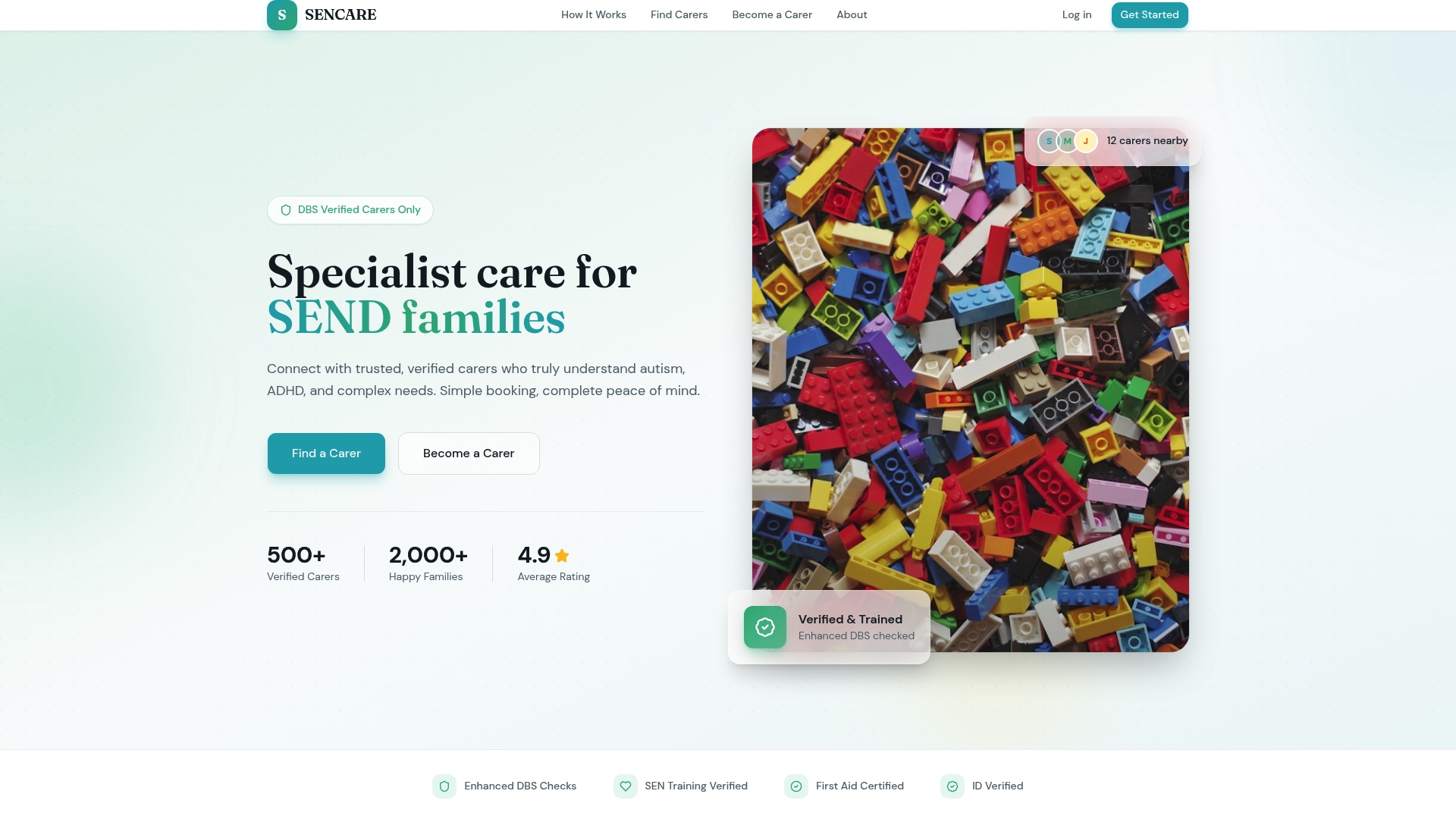
The platform streamlines every aspect of caregiving coordination. Create detailed child profiles highlighting specific needs, preferences, and goals. Search carers by specialist skills, experience, and availability, then book sessions with transparent pricing and secure payment. Integrated messaging keeps communication centralised whilst real-time check-ins provide peace of mind during each appointment.
Every carer undergoes enhanced DBS verification, qualification checks, and identity confirmation before joining. You access genuine family reviews helping you select caregivers whose approach aligns with your child's personality and requirements. The system supports your digital ISP by documenting care sessions and tracking progress towards agreed goals.
SENCARE's verification processes and specialist matching reduce the stress of finding qualified support, letting you focus on your child's development rather than administrative burdens.
Frequently asked questions about SEND caregiving best practices 2026
Do I need an EHCP before accessing specialist SEND support?
No, 2026 reforms introduce 'Experts at Hand' providing immediate specialist consultations without requiring formal EHCPs. Schools can request speech therapists, occupational therapists, or educational psychologists for any child showing SEND indicators, eliminating previous waiting barriers.
How often should Individual Support Plans be reviewed and updated?
Review ISPs at least biannually, typically at the start and middle of each academic year. Schedule additional reviews whenever your child experiences significant developmental changes, transitions between education settings, or when current strategies stop producing progress towards agreed targets.
How do I verify that a SEND carer has proper qualifications and safety clearance?
Request copies of enhanced DBS certificates dated within three years, SEND training certificates from recognised providers, and professional references from other SEND families. Use verified platforms conducting these checks systematically, saving you time whilst ensuring thorough vetting before any caregiver meets your child.
What is 'Experts at Hand' and how do families access these specialists?
This service provides on-demand access to therapists and educational psychologists through your child's school without lengthy referral processes. Schools request consultations directly, specialists observe or assess your child within weeks, then provide practical strategies implementable immediately by teachers and parents.
How can parents maintain effective ongoing communication with multiple caregivers?
Centralise all updates through your digital ISP platform rather than separate emails or messages. Schedule brief weekly check-ins with key carers to share observations and adjust strategies. Use integrated platform messaging for quick questions, reserving detailed discussions for scheduled reviews maintaining everyone's alignment.
What happens if the current caregiving approach isn't producing expected improvements?
Document specific concerns with dates and examples, then request an early ISP review meeting. Discuss whether targets need adjustment, strategies require modification, or your child needs assessment for more intensive specialist provision. Regular outcome tracking helps identify problems quickly before significant time passes without progress.